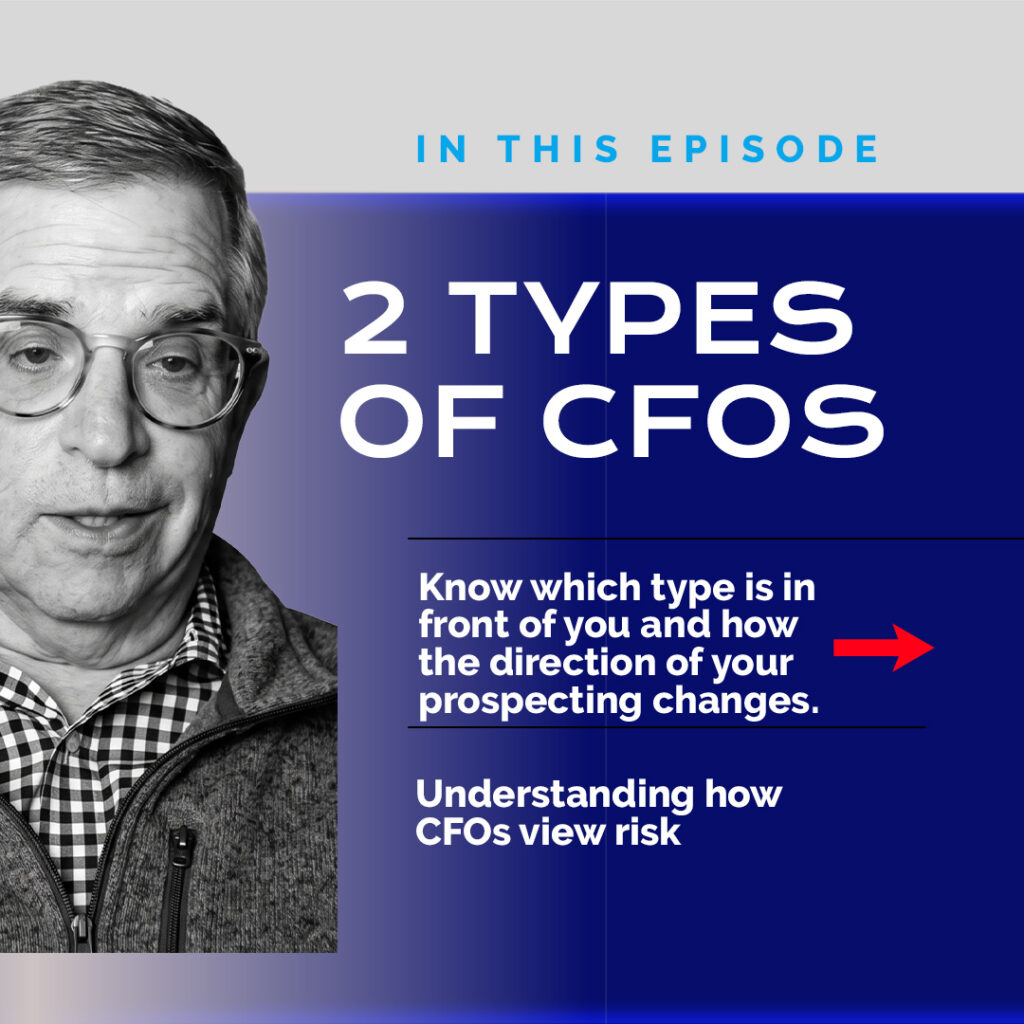
For this episode, I sat down with Jeff Glick. Jeff is a strategic powerhouse. Thirty years ago, he was the CFO of a half-billion-dollar precious metals trading startup, building the infrastructure from scratch. Today, he runs the US operations for OCFO, a firm boasting over 50 CFOs and nearly 100 accountants, having completed 1,400 engagements across 35 countries. He spends his days heavily involved with CFOs, advising companies on how to structure their finances, prepare for massive transactions, and build true value.
As I sifted through the transcript of our conversation, a few massive reality checks stood out for anyone trying to sell into the C-suite today. Here are the core insights from Jeff and myself, on how to stop losing deals to the status quo.
Spreadsheet vs Strategy
When you pitch a CFO, you need to know which version of the executive you are dealing with. Brokers usually make the mistake of assuming all finance leaders only care about the bottom line. Jeff broke it down into two distinct camps.
If you are pitching a Stop Loss program or a self-funded transition, you have to tailor your approach to the person in the chair:
| The Core Focus: The Spreadsheet. |
| The Primary Question: “How much is the premium going up compared to the industry average?” |
| View on Benefits: It is a necessary expense, or worse, a “tax” on the business. |
| Your Pitch Strategy: Show the immediate cost containment, the math, and the hard savings. |
The Numbers-Driven CFO
The Strategic-Driven CFO
| The Core Focus: Long-Term Value & Retention. |
| The Primary Question: “Will this plan stop our top talent from leaving for our competitors?” |
| View on Benefits: It is a strategic tool for total compensation and tax savings (e.g., HSA maximization). |
| Your Pitch Strategy: Show how the plan reduces the massive, hidden costs of employee turnover and recruitment fees. |
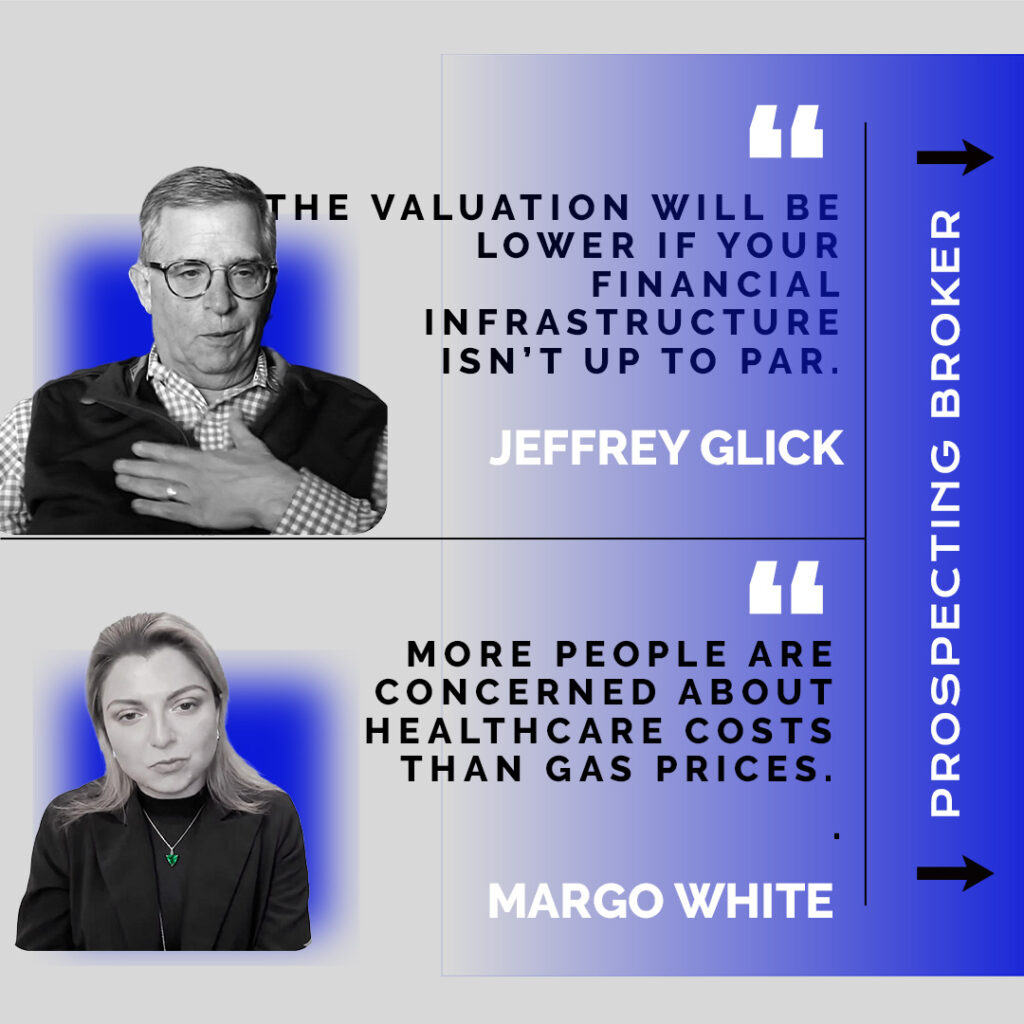
Jeff made it clear – brokers, TPAs, Stop-Loss Carriers, you have to teach your clients why benefits are critical to the livelihood of their business. If you can help a strategic CFO prove that a better healthcare plan reduces a 15% turnover rate, you are solving a massive operational crisis.
Now Available on Amazon
Survivors inventors
A powerful playbook that shows you how to read every prospect’s mindset, smash through resistance to change, and unlock a clear vision of your brokerage’s future.

The Ultimate Dealbreaker: The "Two-Week Notice"



This was Jeff’s biggest pet peeve from his 16 years sitting in the CFO chair, and it’s a trap I see brokers fall into constantly.
CFOs absolutely hate it when the only time they hear from their insurance broker is two weeks before renewal. To a CFO writing massive checks every month, this radio silence implies you don’t care about their business—you only care about your commission.
The Reality Check: You cannot expect a company to drop their fully-insured carrier or fire their legacy broker if you only show up once a year.
The Solution: Send a quarterly newsletter. Pick up the phone just to ask how the business is doing. Bring them that data throughout the year. Large insurance companies are marketing machines; if you want to compete as an independent broker or TPA, you have to stay in front of your clients with proactive, strategic updates.
In prospecting, patience is the tax you pay for real influence.
Margo White X
The 2026 M&A Boom: Build "Franchise Value"
Whether we are talking about your own brokerage/TPA, or the mid-market clients you are trying to win over, everyone has an eye on mergers and acquisitions right now. Private Equity firms are rolling up everything from local paving companies to insurance brokerages.
Jeff highlighted that a lot of business owners want to sell, but they get hit with a terrible valuation because their financial infrastructure is a mess. Buyers are looking for Franchise Value – what the business is worth without the founder running the show.
If your brokerage relies entirely on you producing 80% of the premiums, you don’t have franchise value.
Clean up the house early: If you (or your clients) are planning to sell in a few years, start preparing now. Late, inconsistent financials or missing metrics will cause a buyer to slash your valuation because they are pricing in the risk.
Stop waiting for the “Magical Client”: Small businesses often fail to scale because the founder is wearing too many hats and waiting for one massive enterprise client to save the day. That is a massive concentration of risk. Plant flags in the ground, do phenomenal work for many clients, and let trust and reputation drive your growth.
Understanding how a CFO views risk, infrastructure, and employee retention is the key to finally breaking through the wall of “we’re just going to stay with what we have.” Jeff’s insights are a masterclass in how to elevate your conversations from pure cost to actual strategic value.
Marketing is optional. Prospecting is Oxygen.
In a world obsessed with impressions and “brand voice,” it’s easy to forget what actually moves money in B2B. And it’s not visibility. It’s not content calendars. It’s not clever copy.
It’s conversations.
It’s context.
It’s timing.
It’s persistence.
Marketing might open the door. But prospecting is the one that walks in, shakes hands, and stays until the deal is done.
Prospecting Calculator
Run Sales Simulation
In seconds, you’ll see your future numbers, the deals you could unlock, and how sticking to the right targets reshapes your entire business.