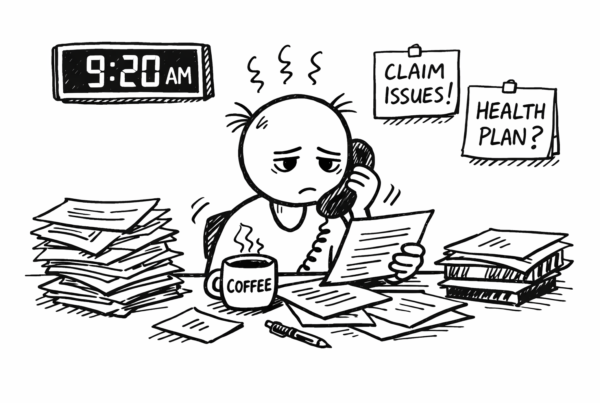
You made the cold call. You sent the email. You had the conversation.
And then… nothing.
If that sounds familiar, you’re not alone (this is how the majority of health insurance world participants act, in reality), but you’re also not off the hook.
Because here’s the brutal truth: the follow-up is where deals are won or lost, and most brokers are failing at it spectacularly.

The Follow-Up Problem Is Much, Much Bigger...
- 48% of salespeople never follow up even once.
- 64% of companies have no organized system to nurture leads.
- 44% of sales reps give up after the very first conversation.
- It takes an average of 8 cold call attempts just to reach a prospect.
- 60% of customers reject an offer four times before making a purchasing decision.
- Only 8% of sales professionals follow up 6 or more times – yet those are the ones closing deals.
- 70% of sales reps send only one email to a prospect. But sending more can give you a 25% chance of getting a response.
- 92% of all customer interactions happen over the phone.
- 42% of prospective customers say they’d be more likely to buy if their sales rep simply called back when they said they would.
Now Available on Amazon
Survivors inventors
A powerful playbook that shows you how to read every prospect’s mindset, smash through resistance to change, and unlock a clear vision of your brokerage’s future.

One-and-Done Is the Same as Never
I don’t hear enough people bringing this topic up, but every call or message you send just once is wasted time. Your prospect will not remember your name. They won’t remember your company. They won’t remember your offer – not in a few days, and certainly not in a year or two. Without consistent follow-up, you’re invisible.
Non-Gambler Brokers Think Differently
Average brokers think: “Lost sale = No Deal, Ever.”
Great brokers think: “Lost sale = Next Time.”
In prospecting, patience is the tax you pay for real influence.
Margo White X
The Golden Rule of A Follow-Up
1. Make the Follow-Up Call Count
- Use your notes. Reference what you learned in your initial call. Ask if anything has changed since you last spoke. Show them you were listening.
- Do your homework. Research company news, leadership changes, new products, or industry reports before you dial. Give yourself something meaningful to talk about.
- Time it strategically. Calling at the right moment dramatically increases your odds of getting through.
- Go multi-channel. Supplement calls with LinkedIn outreach. Meet your prospects where they are.
- End with a clear next step. Every effective follow-up call ends with a call to action – a specific, defined next move that keeps the conversation alive.
- Use a script. Not to sound robotic, but to make sure you hit the points that matter and move the prospect forward.
‘Forget who I am and lose my number.’
2. Master the “Saw This and Thought of You” Strategy
“I saw this report and immediately thought of you.”
“Came across this book – felt like it was written for what you’re dealing with.”
3. Get Creative with Long-Term Prospects
4. Build a Newsletter or Blog That Keeps You Front of Mind
Marketing is optional. Prospecting is Oxygen.
In a world obsessed with impressions and “brand voice,” it’s easy to forget what actually moves money in B2B. And it’s not visibility. It’s not content calendars. It’s not clever copy.
It’s conversations.
It’s context.
It’s timing.
It’s persistence.
Marketing might open the door. But prospecting is the one that walks in, shakes hands, and stays until the deal is done.
Prospecting Calculator
Run Sales Simulation
In seconds, you’ll see your future numbers, the deals you could unlock, and how sticking to the right targets reshapes your entire business.